I I don’t think I realised how bad I was at being bored.
I have had a stark realisation… I don’t really let my brain rest.
There’s always something on.
A podcast.
Music.
Scrolling.
Messages.
Background noise.
Silence feels… inefficient.
And boredom?
Unnecessary.
But maybe boredom is exactly what I’ve been avoiding.
Constant stimulation
When it comes to screen-time, everywhere you look, its clear the negative thoughts surrounding the topic. However, I never associated myself with being ‘chronically online’. I didn’t think I had a problem.
- I work remotely, therefore of course spend a lot of time at my laptop and on my phone, but thats okay because it’s work… right?
- I train most days, therefore of course use my phone for music and planning my training, but thats okay because I’m training… right?
- I stay in touch with my friends regularly, be it catching up over a coffee, or more often due to our schedules via facetime on my phone and of course sending each other reels, but thats okay because I’m socialising… right?
- I read regularly (on my kindle) and make sure I stay up to date with the news (often by reading updates on my phone), but thats okay because I’m educating myself… right.
I had never thought about any of these things too deeply as they feel normal. However, I was listening to a podcast the other day about dopamine – and I had one of those quiet, uncomfortable realisations.
My brain is constantly stimulated.
Not dramatically.
Just… constantly.
And I think it’s been affecting me more than I realised.
Dopamine
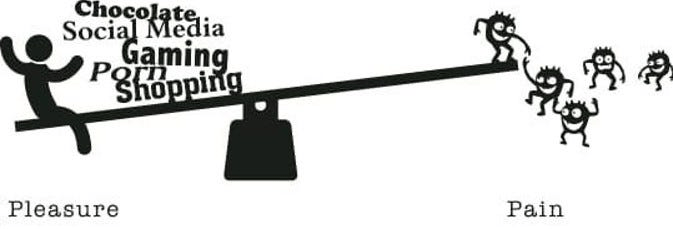
The problem with being constantly stimulated is the disruption it causes in the brains dopamine levels. What I got from the podcast was to view your brain as having a dopamine seesaw.
The goal is to remain level, however, short form content and constant stimulation are all forms of easy dopamine hits. What this does is off set the balance of dopamine in the brain into a surplus. Therefore the brain naturally aims to get back to a state of equilibrium and rebalance that seesaw and what happens is that you will gradually slip into a dopamine deficit… so what do you naturally do?? Crave more dopamine, however this time you have created an element of tolerance to dopamine, so therefore need more of your source of dopamine to achieve the state of pleasurable dopamine you are searching for. And so the cycle continues.
In simple terms, the more we use, the more we crave.
The Bit That Hit Me
My realisation was that dopamine isn’t happiness.
It’s anticipation.
It’s craving.
It’s the “what next?” chemical.
And when you constantly spike it – scrolling, refreshing, checking, consuming – your baseline drops. The result, normal life starts to feel… a bit dull. And thats the part that worried me. Because I love normal life.
- I love my routine.
- I love steady work progress.
- I love long conversations.
- I love building things slowly.
- I love the graft.
But if I’m honest?
There were moments where:
- The gym felt boring.
- Work felt flat.
- Conversations didn’t hold my attention.
- I’d reach for my phone mid-evening for no reason at all.
Not because life was bad.
But because my brain was used to spikes.
Routine Was the First Clue
The irony?
The times I feel best are when I’m consistently showing up for myself and my routine is clear.
I had never thought about any of these things too deeply as they feel normal.
However, I was listening to a podcast the other day about dopamine – and I had one of those quiet, uncomfortable realisations.
My brain is constantly stimulated.
Not dramatically.
Just… constantly.
And I think it’s been affecting me more than I realised.
I’m calmer.
Clearer.
More focused.
It’s like my baseline resets.
The Uncomfortable Part
I talk a lot about standards, ambition, building something meaningful.
But I had to ask myself:
How ambitious can I really be
if I can’t tolerate being bored for 10 minutes?
How focused can I really be
if I need background noise 24/7?
How present can I really be
if I’m half in a conversation and half checking notifications?
That one stung a bit.
Because I don’t want a fried brain.
I want a strong one.
Dopamine & Relationships
This part feels important.
Real relationships aren’t constant novelty.
They’re repetition.
They’re showing up.
They’re sitting in the same room without needing to be entertained.
And if your brain is used to constant micro-highs, depth can feel underwhelming.
That’s not because the relationship is wrong.
It’s because your baseline is off.
And I don’t want to live like that.

Doing the hard things first
Doing the hard things first was another key thing I’ve learnt when it comes to dopamine.
Think about it… If you give a child chocolate for breakfast, fast food for lunch, they’re not going to then want to eat broccoli for dinner as their brain wants the easy joy that these foods provide.
Our brains are the same… If we wake up and immediately scroll – BOOM, dopamine hit. We then make our favourite coffee – BOOM, dopamine hit. We then have sex – BOOM, dopamine hit. We then watch reality TV – BOOM, dopamine hit. Your brain has been overloaded with dopamine and you then spend the remainder of the day craving that same high you experienced as soon as you woke up. And funnily enough, you won’t hit it.
Therefore, the key is to do the hard things first.
- Wake up
- Stetch
- Move your body
- Drink water
- Eat well
- Real life interaction.
- Work
All of these things are slow burning dopamine realises. They challenge you, and therefore the dopamine is not immediate, in fact, often the opposite happens and you may feel reluctant to participate in them, however this is the point.
By putting yourself into an uncomfortable situation first thing, everything else feels easier, and therefore something that you wouldn’t have initially associated with releasing dopamine, suddenly does because in comparison to your previous actions, they feel good. The result, slow release, long term dopamine.
So What I’m Changing (Without Becoming Extreme)
I’m not deleting social media. I’m not disappearing.
But I am:
- Powering my phone off for 2 hours a day.
- Training before I scroll.
- Leaving my phone in another room overnight.
- Protecting quiet.
- Letting myself be bored.
- Not consuming 24/7 “self-improvement” content and calling it productivity.
Because information isn’t action.
And stimulation isn’t progress.

The Bigger Realisation
This links directly to the new chapter I wrote about.
Less accidental.
More intentional.
If I want:
- Higher standards
- Better energy
- Real focus
- Meaningful relationships
- Sustainable ambition
Then I can’t run on constant dopamine spikes.
I need a stable baseline.
And maybe that’s what growing up actually is. Not becoming boring. But becoming deliberate. I don’t want to chase highs. I want to build a life that feels good on an ordinary Tuesday. That feels strong without constant noise.
And if that means protecting my brain a bit more?
Fine.
That feels like a standard worth raising.
Lots of love,
xoxo
 Life Unsorted
Leave a comment